It’s always worth taking the time to have a good look at our pugs, without rose tinted glasses, to ensure they are FIT not FAT!
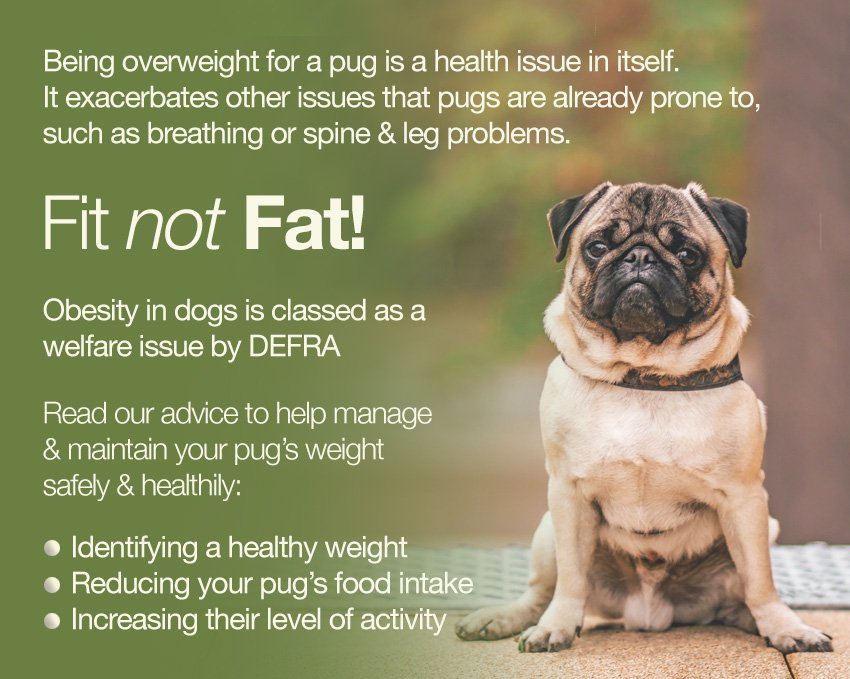
When a pug is overweight, it becomes a health issue in itself. It also exacerbates health issues that pugs are prone to, including breathing, spine and leg problems. Obesity in dogs is also now classed as a welfare issue by DEFRA, under their welfare legislation.
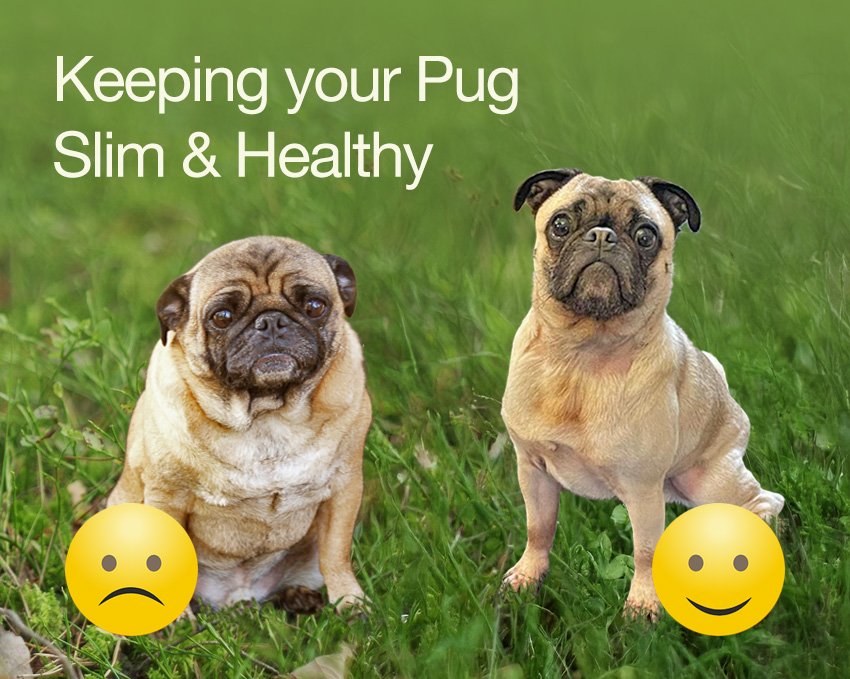
During particular times of the year, such as winter or Christmas, when the weather may make you less active outdoors or turn to comfort eating or over-indulgence, please be extra vigilant that your pugs aren’t included. With too many extra treats, or richer, fattier foods, it can be difficult to notice if, or when, they have gained some extra weight.
Pugs can live up to 15 years of age and most will have some health issues along the way. Plus, the pug breed is particularly prone to weight gain. Therefore, the correct amount and quality of food, as well as regular exercise, is an important formula to keeping them fit and healthy.
It’s important that you don’t overfeed your pug, as an overweight pug will find it difficult to sustain any form of exercise. They love their food and unfortunately many of us are guilty of overindulging our beloved (and demanding) pugs by giving them extra treats and titbits from our own food. Sadly, this means we could be killing them with kindness.
All pugs are different, so there won’t be an ideal weight for the breed as a whole, although the Kennel Club Breed Standard states pugs should be 14 to 18 lbs, equivalent to 6.35 to 8.16kg, and males can be larger than females.
What you need to do is establish an ideal weight for your pug based on its overall size, age and lifestyle. This may be best done with the help of your vet, who can weigh them, advise you and also confirm there are no underlying health issues.
If your pugs are looking a little chubby, it’s really important to act NOW as excess weight can have a big impact on their breathing, joints and mobility, amongst other things. This is especially important before the summer months arrive. As an owner/carer, you have a responsibility to keep your pug at the correct Body Condition Score (BCS), as this can severely impact their health.
Devised by Cambridge University BOAS Research Group, this chart is an excellent reference to see what score your pug relates to, and where they need to be! It shows how pugs look, rather than being weight-specific.
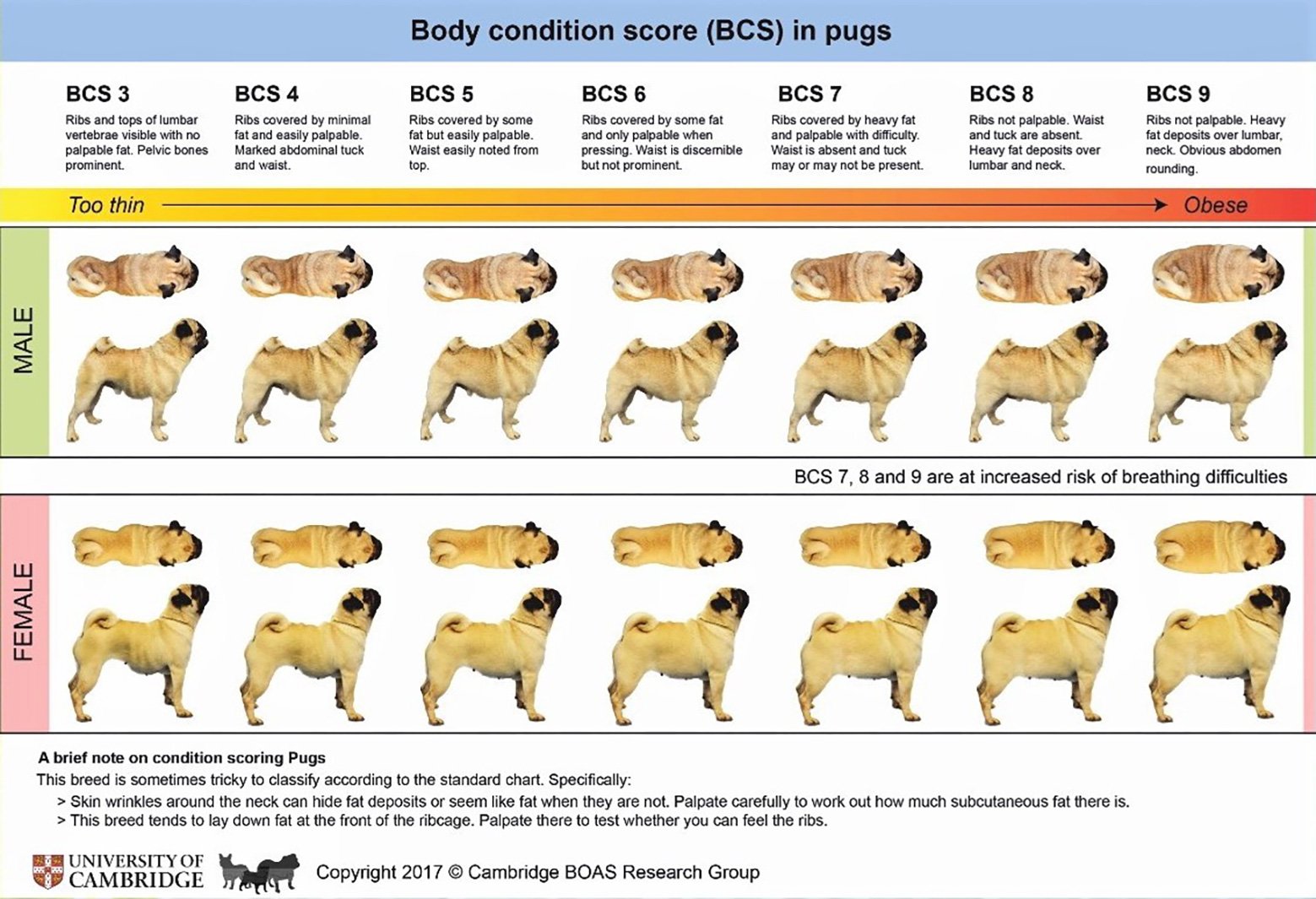
A Body Condition Score (BCS) should ideally be around 5 out of 9. As you can see by the illustrations, 5 is fairly slim.
Excess fat is usually stored around a pug’s neck. This can adversely affect their breathing, as well as their vital organs, such as the heart and lungs. It can cause diseases such as cancers and diabetes. Being too heavy will also put extra pressure on their spine and joints, such as knees and shoulders.
So, what can we do? Firstly, check to see if your pug is overweight – have a look at their profile/shape compared to the chart above. If they go in at the waist, you can easily feel their ribs and they are active and lively, this probably means that your pug is at a good weight.
If they are parallel from shoulder to hips with a large neck, you can’t feel their ribs and they pant a lot during exercise or walking, then they will most likely need to lose weight.
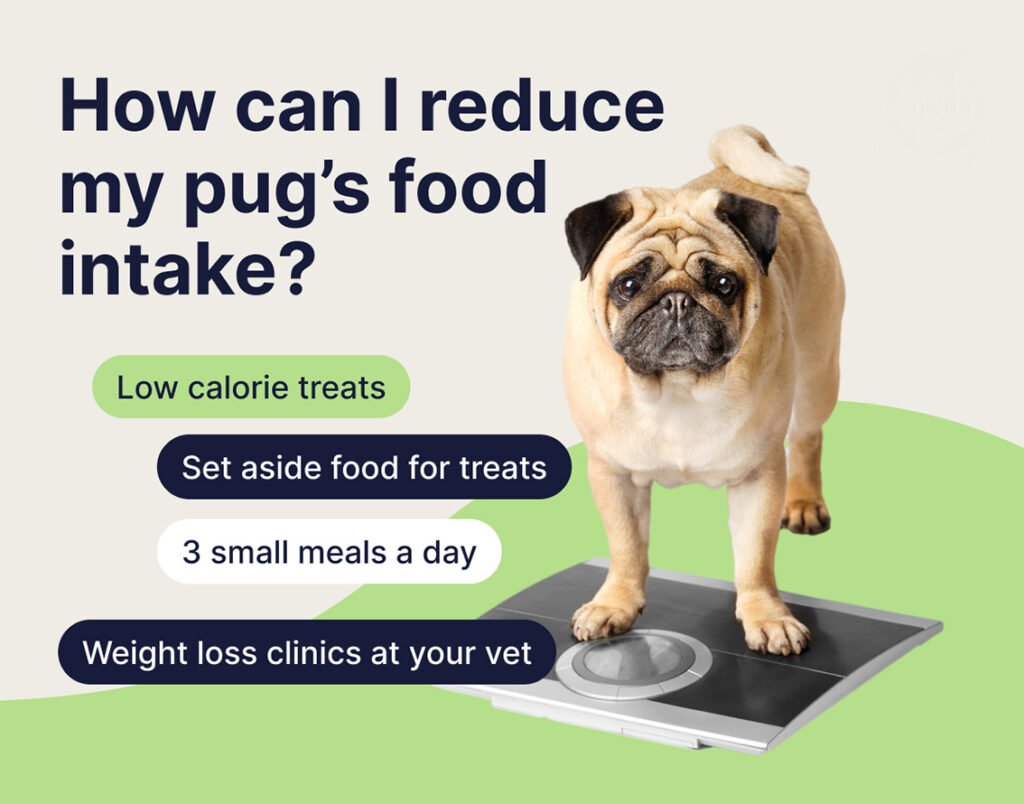
Once you’ve established that your pug needs to lose weight and it’s safe to do so, you’ll need to make a plan of how to achieve it with reduced food intake and increased exercise.
Start by making a food diary of everything your pug eats – remember to include all meals, treats and titbits that anyone in the family gives to them! You can then set about deciding the best way forward to achieve their target weight! It may be that they are being given far too many titbits and extras and if you cut those out, it may be sufficient for weight loss.
If not, and you also need to cut down your pug’s meals, do so significantly or they won’t lose weight. You can cut down maybe even by half – always weigh the food so that you keep a tight control on what you’re giving them. It’s easy to be fooled by eye alone. Also, swap to a low calorie dog food, they are available commercially, such as Hill’s light (they have foods for regular as well as senior).
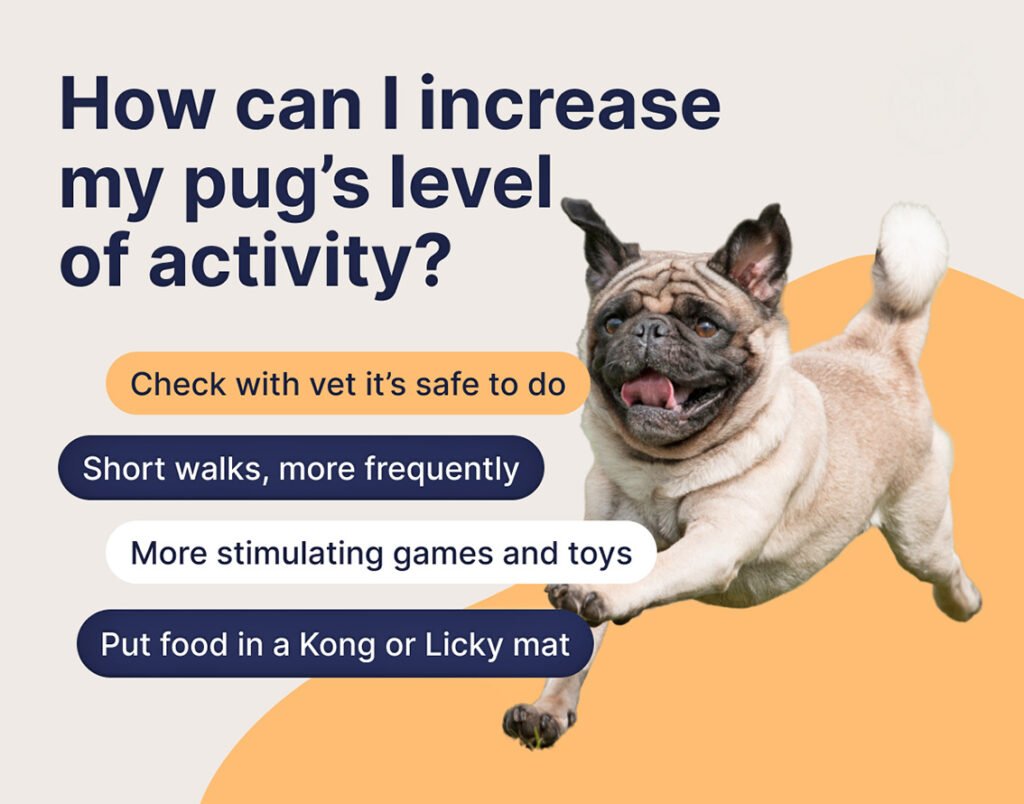
Daily exercise should be encouraged, while keeping an eye on any potential breathing problems or health issues, as this will differ from pug to pug.
While they are happy to have frequent siestas, they will be even happier and healthier with regular daily exercise. Pugs are lively and intelligent, so will enjoy both physical and mental stimulation. Off the lead exercise and game play in a secure area will benefit them greatly.
Once you have checked with your vet it is safe to do so, try to start to increase your pug’s exercise – little and often is best!
Short walks, but more of them, are preferable to start with and always during the coolest part of the day. As pugs are a brachycephalic breed they are extra sensitive to heat. In hotter summer months, exercise should be confined to cool early mornings or late evenings.
Once your pugs start to lose weight, they will feel better and have more energy – they will probably play more, enjoy life a lot more and live a healthier, longer life!
Plus, don’t forget to take a look at our ‘Pug Health’ page that has a wealth of helpful general health information for your pugs…
Pug Welfare & Rescue
Lytchett House
13 Freeland Park
Wareham Road, Poole
Dorset, BH16 6FA
Registered Charity No. 276067
Could you help us to rescue more Pugs in Need?
Keep up to date with all of our latest news…
© Pug Welfare & Rescue 2026 | Privacy Notice | Terms of Use